This article is part of our pool builder branding: a guide to premium positioning. Start with the full guide for the complete process, then use this article to work through one decision.
Clarify what makes your pool company valuable, show credible craftsmanship and communicate project fit without sounding unapproachable.
A homeowner requests a bid for a custom outdoor living project. They look at your portfolio of six-figure masterworks, then hand you a competitor's quote for a basic concrete shell and ask if you can match the price.
This sales friction is rarely a sales problem, it is a positioning problem.
When a premium pool building firm uses the same marketing playbook, visual cues, and messaging as a local volume builder, it creates immediate cognitive dissonance. High-net-worth clients expect an elevated, highly professional experience when preparing to spend $200,000 or more on their property. When your digital touchpoints look cheap, hurried, or generic, those clients will treat your company like a commodity. They will request line-item breakdowns, negotiate your margins, and compare your custom shotcrete structures to mass-market drop-in shells.
To eliminate this friction, you must intentionally realign your positioning. This guide details how to build a brand identity that acts as an operational filter, protecting your team from low-margin estimates and attracting the projects your craftsmanship deserves.
1. The Volume Contractor Look and How to Avoid It
Volume builders operate on a business model that requires high lead volume and rapid project turnover. Their marketing assets are designed to capture as many inquiries as possible with minimal friction. This operational reality dictates their visual style.
You can recognize the volume contractor look by several distinct features:
- Websites populated with stock photos of indistinguishable families splashing in generic water, rather than actual completed projects.
- Inconsistent colors, type and visual treatments that make the company difficult to recognize.
- Calls to action that promise something the sales process does not actually provide.
- Services listed as a raw menu of line items, excavation, shotcrete, plumbing, tile, rather than a cohesive architectural process.
When a luxury custom builder adopts these visual cues, they signal to the market that they are running a transactional, volume-driven operation.
To avoid this, your brand must communicate selectivity and architectural authority. Your website should showcase custom, high-resolution photography of your completed estates, focusing on architectural integration, raw material textures, and structural engineering. Replace transactional phrases like "Get a Quote" with high-value, high-friction entry points, such as a structured project inquiry form that asks about site conditions, architectural plans, and serious budget parameters.
2. Premium Brand Positioning Starts by Turning Craftsmanship into Storytelling
Volume contractors sell pools by the linear foot, the gallon, or the number of pumps. They treat construction as a manufacturing exercise. If you compete on these terms, you are competing on price.
A premium brand positioning shifts the focus from raw materials to the narrative of mastery. You are not selling concrete and water, you are selling an estate centerpiece and an engineered asset.
To justify your pricing power, you must document the invisible craftsmanship that occurs before the water is turned on. This means detailing the structural engineering required to build on a complex slope, explaining the hydraulic calculations that ensure whisper-quiet operation, and showing the precision of your hand-aligned stone coping.
Instead of listing technical specifications as static bullet points, turn them into stories of technical execution:
- Explain the design decisions behind a real project and have technical performance claims checked by the team responsible for the design.
- Document the process of hand-selecting Turkish travertine to ensure color consistency across a large-scale hardscape.
- Document the applicable engineering and inspection process without claiming that every project exceeds every code requirement.
When you articulate the logic behind your construction standards, you educate the client on the real cost of quality. You shift the conversation from a cost-per-square-foot debate to an investment in structural integrity.
3. In the Luxury Market, the Craftsman Defines Value
In the mass market, the consumer holds the leverage because the product is largely identical across competitors. If you allow the client to define the value of your work, they will default to the lowest common denominator, shopping your bid to find a cheaper alternative.
In the luxury segment, the builder establishes the standards of value. This authority stems from your deep technical expertise, your refined design methodology, and your refusal to compromise on construction quality.
A credible brand gives the sales team a clearer basis for discussing value. Buyers can still compare prices and ask detailed questions; welcome those conversations with accurate scope, evidence and tradeoffs.
This level of authority requires transparent, firm communication. If a prospect asks to remove specific structural engineering steps to save money, a premium brand has the confidence to decline the project. Your positioning must make it clear that your building standards are non-negotiable, protecting both your brand equity and the client's long-term investment.
4. Exclusivity Without Detachment: Filtering Without Arrogance
Establishing a premium position does not mean adopting a cold, pretentious, or detached tone. You do not need to sound exclusive in a way that alienates the hard-working trade professionals who build your projects. You can remain completely grounded, approachable, and human, while maintaining strict boundaries on your project capacity.
True exclusivity in custom building is based on operational reality, not artificial snobbery.
Describe your actual capacity and quality-control approach. A selective annual schedule can be part of the positioning when it reflects how the business really operates.
This operational limit is your greatest positioning tool. Communicate your capacity constraints openly:
- Explain how project supervision works, including who the client contacts and how often they receive updates.
- State your minimum project size clearly on your inquiry pages to save time for both your team and the homeowner.
- Detail your multi-step discovery and design process, showing that you invest significant resources into planning before any heavy equipment arrives.
When clients understand that your selectivity is a mechanism to protect the quality of their own build, they do not view your minimums as arrogant. They view them as a reflection of professional standards. This transparent approach filters out price-shoppers while building trust with serious, high-end clients.
5. Brand Identity as a Long-Term Business Tool
Branding is not an aesthetic luxury, it is a strategic shield. It directly impacts your profit and loss statement by protecting your Average Contract Value (ACV), preserving your net margins, and optimizing your sales efficiency.
When your brand presentation is misaligned with your physical capability, you waste dozens of hours every month driving to consultations, drafting bids, and chasing clients who were never qualified to hire you. This sales friction carries a high operational cost, pulling your senior leadership away from project execution and quality control.
By aligning your brand identity with your true level of work, you build an automated system that qualifies prospects before they ever speak with your sales team. Your pipeline becomes cleaner, your sales cycle shortens, and your closing ratio on high-end bids increases.
This is how you build compounding value in your business. You stop fighting for volume and start securing the high-margin, career-defining projects that allow your firm to scale sustainably.
FAQs
If we stop offering free estimates, won't we lose most of our incoming leads?
A paid discovery phase or more detailed intake can change both inquiry volume and fit. Explain what is free, what is paid and what the client receives. Test the effect on qualified consultations rather than assuming all lost inquiries are unsuitable.
How do we communicate high project minimums without alienating local referrals?
You communicate your minimums through the lens of project complexity and operational focus. Rather than stating a flat, cold dollar amount, explain that your engineering standards, custom hydraulic systems, and architectural design integration require a minimum baseline investment to execute correctly. This frames your minimum project size as a quality safeguard, not an arbitrary entry barrier, preserving your local reputation while protecting your capacity.
How can we show craftsmanship on a digital platform without sounding overly technical?
Use verified project examples and explain the practical outcome of a design choice. Avoid promising maintenance savings, safety or structural performance that the design team has not substantiated.
Elevating Your Brand Position
Building custom outdoor living spaces is a demanding, high-risk business that requires masterful engineering, deep trade coordination, and intense management. If your digital presence looks like a basic pool installer, you are leaving your hard-earned margins on the table.
We partner with premium design-build firms to build the strategic brand infrastructure, marketing systems, and positioning assets required to attract better-fit projects. Together, we can align your brand with your physical execution, protect your pricing power, and establish your business as a credible specialist.
Continue your reading
See the strategy in practice
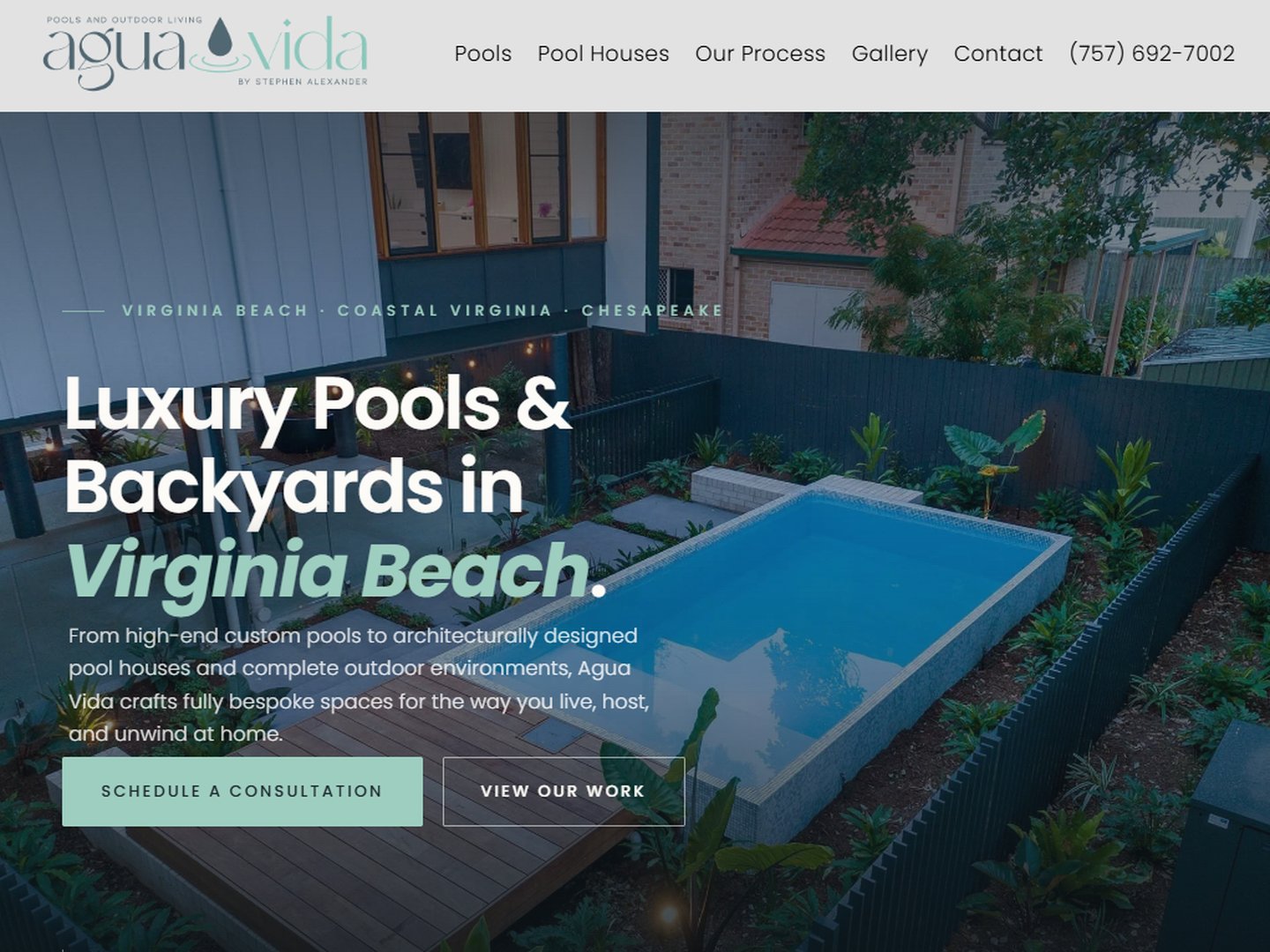
Explore the Agua Vida Pools & Outdoor Living case study for a documented Bryant Digital project. The case study explains its own scope and reported outcomes; it is not a projection for another business.
For help applying this work, review our brand positioning for pool builders and the Market Leader System, or explore all pool builder marketing resources.