This article is part of our pool builder branding: a guide to premium positioning. Start with the full guide for the complete process, then use this article to work through one decision.
Translate pool building expertise into clear customer value, consistent website copy and useful sales conversations about project investment.
When a sales consultation begins with repeated questions about price, review whether your messaging explains the scope and value clearly enough. Pricing questions are normal; the aim is to answer them with useful evidence.
Your communication strategy should do the heavy lifting before the contract is even drafted.
In the luxury market, your brand voice must establish an authoritative, non-negotiable standard of quality. It must filter out price-sensitive buyers while signaling absolute competence to high-net-worth homeowners. By executing a deliberate messaging framework, you can preemptively address pricing objections, protect your sales team's time, and preserve your healthy profit margins.
1. Establishing a Definitive Tone of Voice to Maintain Authority Without Arrogance
Authority in the premium pool building sector does not require a cold, distant, or snobbish attitude. True authority comes from deep technical expertise, absolute operational clarity, and quiet confidence. When you speak to high-net-worth clients, you must speak as an expert peer, not a grateful contractor hoping to win a bid.
An authoritative brand voice values transparency over empty promises. It avoids desperate, high-energy sales pitches and instead focuses on realistic project parameters:
- Define your limits clearly. Share your annual build capacity openly, explaining that you limit construction starts to maintain strict quality control.
- Speak with absolute certainty about structural realities. If a client requests a design choice that compromises soil stability, state your refusal directly based on engineering principles.
- Focus on operational efficiency. Discuss your project management systems, your dedicated trade partners, and your material procurement schedules with calm assurance.
When you set these parameters early, clients realize you are not desperate for their business. They see a professional firm that values its standards, which makes them much more likely to trust your pricing and defer to your building expertise.
2. Stripping Away Dense Industry Jargon to Focus on Desired Lifestyles
Many custom builders try to justify their six-figure prices by overloading their marketing with technical terms, part numbers, and engineering jargon. While technical excellence is vital, presenting raw specifications without context bores the buyer and reduces your craft to a commodity list. If you talk only about pump horsepower and pipe schedules, the client will shop those components around to find a cheaper installer.
Your messaging must translate complex engineering into the actual lifestyle outcomes your client desires:
- Translate equipment specifications into verified benefits, such as quieter operation or easier controls, while retaining the model and performance details a client needs.
- Explain how the proposed hydraulic design supports the project’s requirements, without promising perfect water quality or maintenance-free operation.
- Describe material appearance, texture and suitability accurately. Confirm surface-temperature or slip-resistance claims against the selected product and installation conditions.
Connecting specifications to practical outcomes makes technical information more useful. Keep those outcomes within what the project design, products and warranty actually support.
3. The Exact Vocabulary Required to Preemptively Handle Pricing Objections
The words you choose in your copy, proposals, and presentations dictate how clients perceive your value. If you use mass-market contractor terms, you invite mass-market budget negotiations. You must consciously upgrade your vocabulary to frame your work as a long-term property investment rather than a transactional expense.
Use this systematic vocabulary shift to establish your premium positioning:
| Common term | Useful clarification | Why it helps |
|---|---|---|
| Quote or bid | A proposal with a clear scope | Explains deliverables, assumptions, exclusions and next steps. |
| Pool | The specific pool design and outdoor-living scope | Uses familiar language while identifying what is included. |
| Price or cost | The price, scope and payment stages | Makes the financial commitment understandable without implying a guaranteed increase in property value. |
| Budget-friendly | The specific scope or material tradeoff | Explains how an option changes cost and performance. |
| Free estimate or paid discovery | State what is free, what is paid and what each includes | Lets the homeowner make an informed choice. |
Implementing these changes across your website, contracts, and sales collateral changes the entire financial dynamic. The homeowner begins to view your fees as the necessary capital required to execute a high-end architectural asset.
4. Why Your Website Copy Can Never Sound Like the Cheapest Bid in Town
A pool builder’s website should make the work easy to understand and evaluate. Clear pricing guidance and calls to action can coexist with a refined visual identity.
To protect your margins, audit your website copy to eliminate these common volume-builder signals:
- Remove loud calls-to-action like "Get a Free Quote Instantly" or "Unbeatable Local Prices." These phrases signal that you compete on cost and speed.
- Avoid stock photography of generic families. Instead, present custom, high-resolution imagery that highlights the raw textures of natural stone, the clean alignment of negative edges, and the spatial harmony of your designs.
- Replace generic services lists with a structured, multi-step execution process. Detail your soil testing, structural engineering, architectural integration, and post-construction handoff.
Describe your process, scope and standards honestly. A polished brand should help clients compare proposals fairly, rather than imply that comparison shopping is inappropriate.
5. Arming Your Sales Team with a Consistent Script for High-Stakes Consultations
When a prospect questions pricing, explore the scope of the comparison. The goal is to clarify differences and tradeoffs without disparaging another builder or inventing performance claims.
Your sales team needs a clear, grounded script to handle these high-stakes moments with absolute poise:
Prospect: "Your proposal is $45,000 higher than the other bid we received. Why should we pay this premium?"
Your Representative: “Thanks for sharing that. Let’s compare what each proposal includes: design work, engineering, materials, project management and aftercare. Our proposal explains our scope and the reasons behind the cost. If the budgets differ, we can discuss documented scope options and whether our approach matches your priorities.”
This example keeps the conversation specific and respectful. Adapt it to the actual proposal and avoid claims about a competitor’s quality that you cannot substantiate.
FAQs
Will changing our vocabulary alienate regular clients who might have a decent budget?
Clear language helps people understand value, but ornate terminology can create confusion. Prefer familiar words such as “pool,” “price” and “proposal” when they answer the buyer’s question more directly.
How do we transition from "Free Estimates" to a "Paid Discovery Phase" without losing serious inquiries?
Explain the actual deliverables, fee and decision process for paid discovery. It can reduce uncertainty, but site findings, approvals and scope changes can still affect the construction price. Do not promise zero change orders.
What should we do if a client insists on using their own materials or subcontractors to save money?
Explain your documented policy and any implications for coordination, responsibility and warranty coverage. Confirm project-specific terms in the agreement instead of making blanket claims about liability.
Protecting Your Pricing Power
Building elite, custom outdoor living spaces is a complex engineering achievement. If your brand communication sounds identical to a local pool installer, you will constantly find yourself defending your margins to clients who do not understand the complexity of your work.
We partner with premium custom design-build firms to construct the messaging frameworks, marketing assets, and brand positioning strategies required to attract better-fit projects. Together, we can align your digital voice with your physical craftsmanship, protect your pricing power, and establish your firm as a credible specialist in your market.
Continue your reading
- Pool Builder Logo Design: Building a Versatile Logo Suite
- What Belongs in a Pool Builder Brand Style Guide?
See the strategy in practice
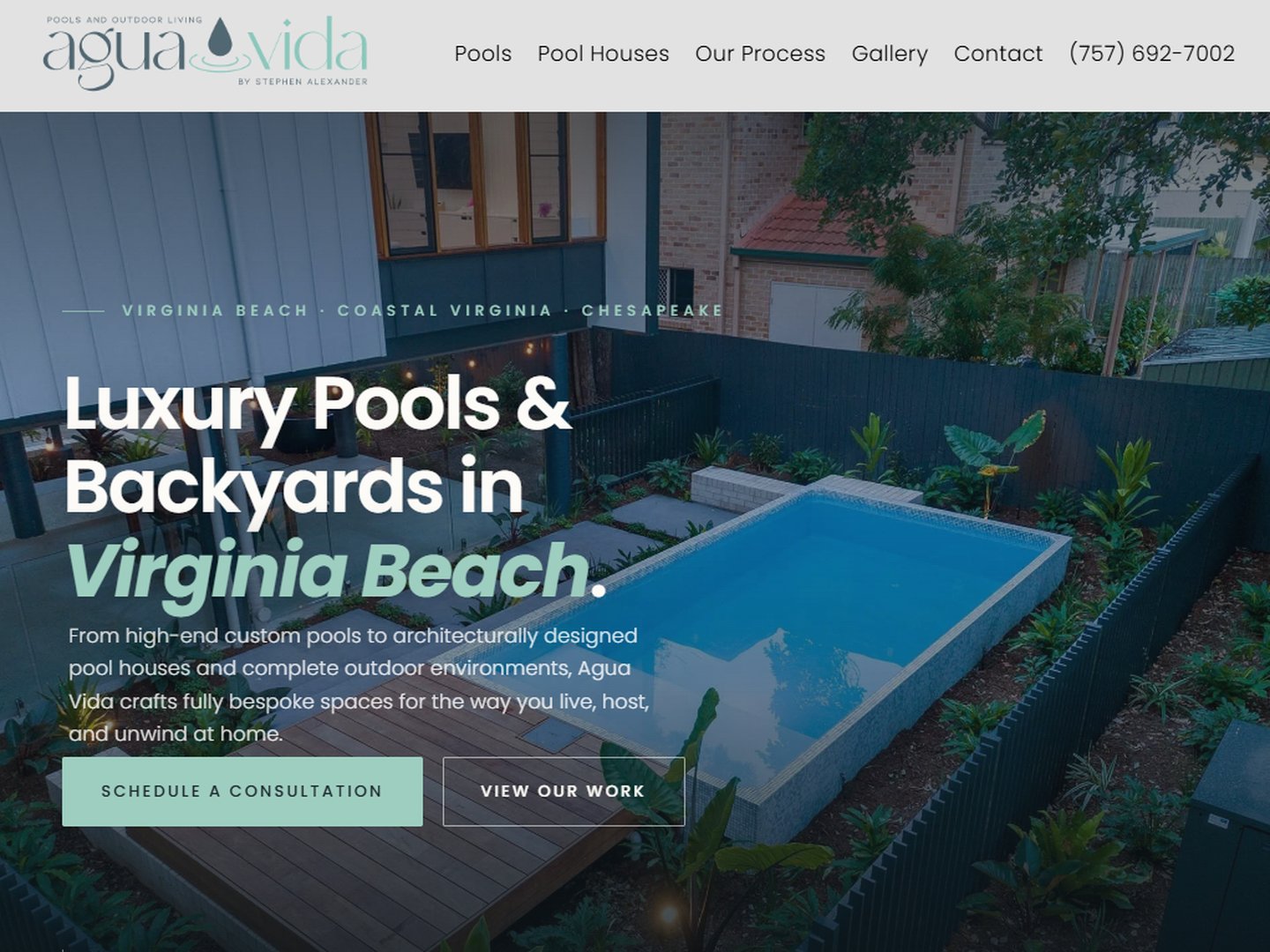
Explore the Agua Vida Pools & Outdoor Living case study for a documented Bryant Digital project. The case study explains its own scope and reported outcomes; it is not a projection for another business.
For help applying this work, review our brand positioning for pool builders and the Market Leader System, or explore all pool builder marketing resources.