This article is part of our pool builder branding: a guide to premium positioning. Start with the full guide for the complete process, then use this article to work through one decision.
Build useful pool buyer personas from real customer goals, project fit, objections and sales conversations, beyond income assumptions.
Standard marketing models teach business owners to target prospects using basic statistics like age, neighborhood, and household income. In the luxury design-build space, these metrics represent basic table stakes, not a strategic advantage. A homeowner with a household income of half a million dollars might buy a mass-market, pre-packaged fiberglass pool, while another homeowner with the exact same income demands a custom, multi-tiered architectural masterpiece.
The difference lies in buyer psychology, not net worth.
When you build six-figure outdoor environments, you are not selling a basic backyard addition. You are selling an engineered asset that alters the value and aesthetic of a family estate. To secure these projects consistently, your team must look past geographic data to target the deep psychological triggers, functional desires, and underlying objections of high-net-worth homeowners.
1. Bypassing Basic Demographics for High-Net-Worth Buyers
Geographic and household data can help frame market research, but they do not establish an individual’s budget or buying intent. Combine them with project history, interviews and inquiry data.
High-value pool clients divide into distinct psychological profiles based on how they view their property, their time, and their family dynamics.
For instance, some premium buyers focus entirely on family preservation and legacy. They view an outdoor environment as a private sanctuary where they can control their family experiences, away from public spaces. Their primary motivation is the creation of a secure, multi-generational gathering space. They want to know how the design accommodates children of different ages, how the layout encourages conversation, and how the materials prioritize safety.
Other buyers may focus on architectural integration, material choices and coordination with the home’s design. Treat this as a hypothesis to validate with actual customers, not an assumption based on occupation.
Targeting these clients requires you to speak directly to these internal motivations. If your marketing assets only show generic pictures of clean water, you miss the emotional and intellectual drivers that make these buyers sign premium contracts.
2. Identifying and Dismantling High-Value Client Objections Proactively
Buyer objections can involve cost, timing, disruption, confidence and risk at any budget level. Learn which concerns arise in your own sales process.
Premium buyers still weigh affordability and value. They may also want clear plans for site access, project supervision and communication during construction.
You must dismantle these objections before the client ever voices them. Your brand presentation, sales collateral, and initial discussions should address these hidden anxieties directly by showing them your internal operations:
- Describe your real project-management model, including who supervises the work and how responsibilities are assigned.
- Present your communication protocols, detailing how you provide weekly schedule updates, material delivery tracking, and phase-by-phase photo documentation through a dedicated client portal.
- Highlight your liability and engineering standards, explaining how your structural engineers analyze soil conditions and slope stability before your team cuts a single yard of earth.
By addressing these systemic worries early in your marketing and initial sales calls, you build immediate trust. You demonstrate that you respect their property, their time, and their peace of mind just as much as you respect their investment.
3. Building a Brand Voice That Functions as a Highly Selective Filter
An eager, overly accommodating brand voice actually repels high-net-worth clients. When a business owner uses aggressive sales language, offers rapid discounts, or promises impossible construction timelines, they signal operational desperation. In the luxury market, desperation looks like incompetence.
Your brand voice must act as an operational filter, protecting your team from bad-fit prospects while attracting serious buyers.
To achieve this, establish clear boundaries in your written copy and verbal discussions. Speak as an expert peer, not a grateful contractor:
- Explain genuine capacity limits and how you manage active projects. Do not invent a restricted annual quota to create scarcity.
- State your project minimums clearly on your website. Doing so shows respect for the homeowner's time, preventing them from engaging in a lengthy design phase for a project that falls outside your construction scope.
- Use precise, definitive language. Instead of saying you can try to work within a highly compressed timeline, explain the realistic constraints of custom concrete curing, stone procurement, and structural engineering.
This level of honesty filters out clients who expect rapid, low-quality turnarounds, while attracting those who value structural durability.
4. Translating Physical Craftsmanship into Trust
In the custom outdoor living market, buyers cannot see, touch, or test their pool before they purchase it. They are buying a promise, represented by a digital rendering and a contract. To turn that promise into concrete trust, you must make your invisible craftsmanship highly visible.
This requires you to change the way you document your work. Do not limit your portfolio to finished, staged photographs of completed estates. While these images are beautiful, they do not prove that you are a master builder. They only prove that you hired a good photographer.
Build deep trust by documenting the raw engineering phases of your projects:
- Use project-approved examples to explain how the design team balances hydraulic performance, equipment selection and serviceability.
- Photograph your steel reinforcement grids, explaining your rebar schedules and concrete thickness choices to show how your structural engineering protects the pool shell from shifting on difficult hillsides.
- Document your tile and coping installation, showing the painstaking process of hand-selecting and mitering stone corners to prove that your craftsmen operate at an architectural grade of precision.
When you display this level of technical detail, you shift the prospect's attention from aesthetics to engineering. You show that your higher pricing reflects physical, measurable superiority.
5. Securing High-Margin Projects Through Precise Client Profiles
Developing precise client profiles is an operational strategy that directly improves your bottom line. When your sales team understands the exact psychological profiles of your target buyers, they stop wasting hours on dead-end consultations.
Create two or three detailed profiles based on real clients who have hired you for your best, highest-margin projects:
- The Architectural Perfectionist: This client values integration, clean lines, and advanced engineering. They want to know the science behind your sanitation systems, the precise layout of your edge details, and how you coordinate with their home architect.
- The Family-Focused Buyer: This client may prioritize usability, gathering spaces and privacy. Ask about those goals and discuss safety and material choices with the qualified professionals responsible for the project.
Use these profiles as prompts for better questions, not rigid labels. Let each homeowner’s answers guide the consultation.
FAQs
Will high-value clients be turned off if our brand voice is highly restrictive or direct?
Clear boundaries can be helpful when explained respectfully. Avoid assumptions about a client’s profession or wealth, and give people room to ask questions about scope, pricing and timing.
How do we identify the psychological profile of a homeowner during the first call?
Ask open-ended questions about their lifestyle and their long-term plans for the property, rather than asking what pool features they want. A question like, "How do you picture your family utilizing this space five years from now?" will immediately reveal whether they prioritize family legacy or architectural aesthetics. Their answer will guide your entire presentation strategy.
What is the best way to present our structural engineering standards to a non-technical buyer?
Explain the design objective and the review process in plain language. Avoid promising that a specific material or reinforcement detail prevents all cracking or guarantees decades of performance.
Securing Your Market Position
Designing and building elite outdoor environments requires masterful engineering, deep trade coordination, and intense project management. If your brand communication targets basic demographics with generic sales messages, you will continue to attract price-sensitive buyers who do not understand the value of your work.
We partner with premium custom builders to design the brand systems, positioning strategies, and communication assets required to attract better-fit projects. Together, we can refine your message, protect your margins, and position your firm as a credible specialist.
Continue your reading
- A Brand Messaging Framework for Pool Builders
- Pool Builder Logo Design: Building a Versatile Logo Suite
See the strategy in practice
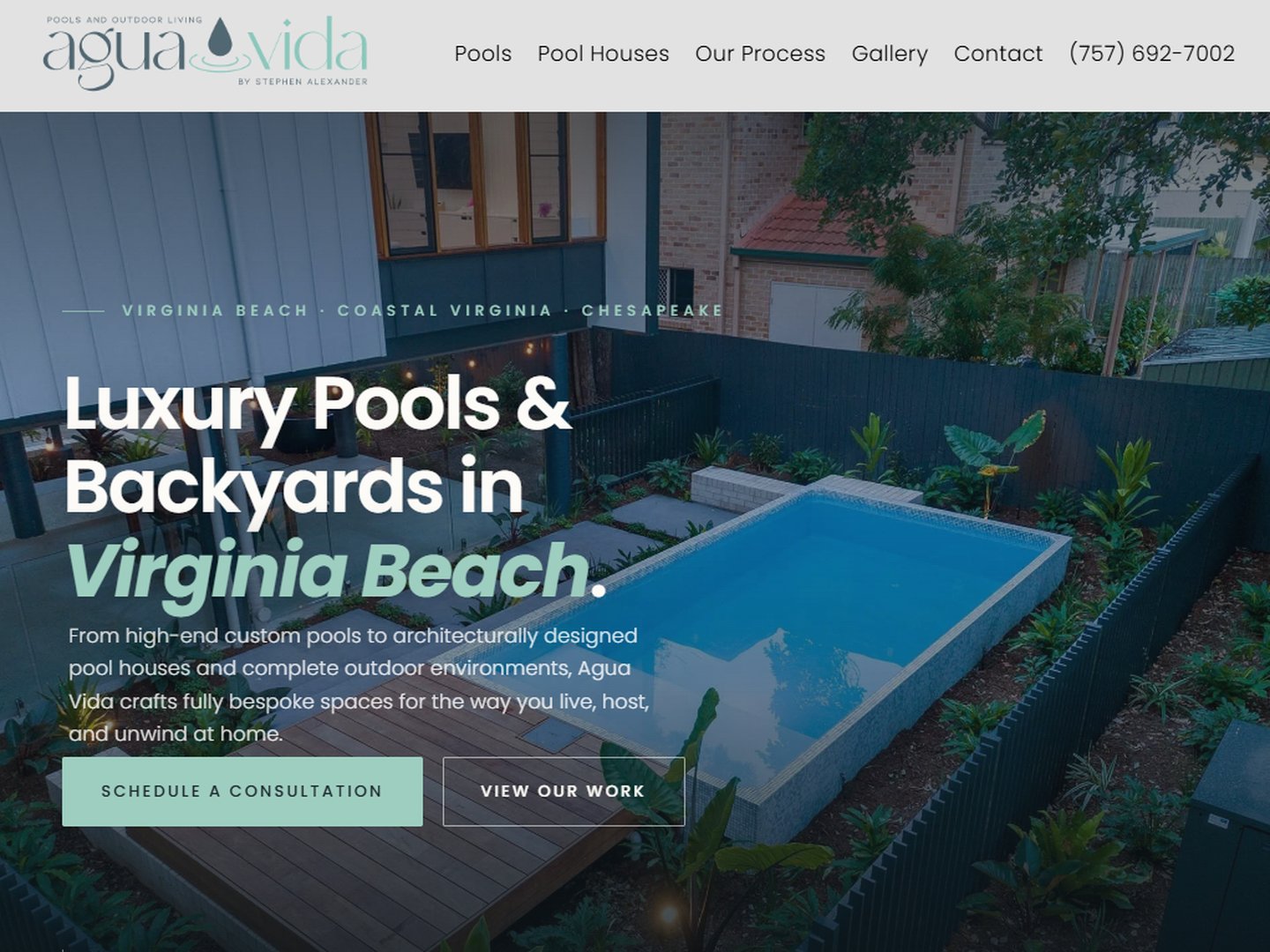
Explore the Agua Vida Pools & Outdoor Living case study for a documented Bryant Digital project. The case study explains its own scope and reported outcomes; it is not a projection for another business.
For help applying this work, review our brand positioning for pool builders and the Market Leader System, or explore all pool builder marketing resources.