This article is part of our pool builder branding: a guide to premium positioning. Start with the full guide for the complete process, then use this article to work through one decision.
Connect your pool company rebrand to daily operations with staff training, a shared asset library and useful measures of business impact.
An elite design-build firm invests substantial capital into a comprehensive corporate rebrand. The new visual identity is sophisticated, the website is immaculate, and the strategic positioning is designed to target high-net-worth estate owners.
Two months after the launch, the business owner notices a disturbing pattern.
Sales representatives are still sending out outdated, mismatched estimate templates. Project managers continue to wear faded, grease-stained shirts with the old company logo on active construction sites. The office manager still attaches low-resolution, warped graphics to regional vendor agreements.
This kind of disconnect makes a new brand harder to apply consistently.
When a rebrand is treated as an isolated marketing project, your team views it as a superficial executive vanity exercise. To protect your investment, you must treat your new brand identity as an operational standard. You must align your internal culture, establish strict digital asset management systems, and prove to your entire team how visual discipline directly impacts the company's balance sheet.
1. Why Premium Brand Deployments Fail Without Internal Alignment
A premium pool building brand is a connected chain of customer touchpoints. The strength of your positioning is dictated entirely by your weakest link. If a prospective client experiences a flawless digital presentation on your website but encounters disorganized, unpolished behavior from your field staff, the premium illusion breaks instantly.
Internal misalignment destroys marketing return on investment (ROI).
When employees do not understand or respect the new brand standards, they default to comfortable, low-quality habits. This visual friction signals a lack of internal coordination to high-net-worth buyers, who associate operational disorganization with high construction risk.
To prevent this erosion, treat the brand rollout as a strict internal operational deployment. It is not an external promotional stunt; it is a structural company standard. Your team must understand that the new visual identity is a mandatory baseline, directly tied to project execution, client relations, and quality control.
2. Bypassing Discussions to Explain the Underlying Business Logic of a Rebrand
When a high-end pool builder introduces a new brand identity, employees often react with subjective personal opinions. A project manager might dislike the new typography. A sales representative might criticize the restrained color palette, wishing for louder, high-visibility colors.
Explain the reasons behind the decisions, then invite practical feedback from the people who will use the materials.
Connect the brand system to the business goals it is meant to support:
- Explain how clearer positioning and qualification may improve acquisition efficiency, then measure the results.
- Demonstrate how clean, architectural layouts justify your premium pricing structures, protecting your net margins during competitive bidding.
- Show how the visual system makes the company recognizable and supports its chosen position.
When your staff understands that the visual standards are built to achieve specific financial goals, they stop treating the rebrand like an artistic project. They begin to respect the design system as a functional business asset.
3. Proving to Sales Reps and Project Managers How Elevated Standards Support the P&L
Every employee in your organization is motivated by different operational goals. To secure their long-term commitment to the brand, you must show them how visual consistency directly improves their daily working conditions and income potential.
Your sales representatives want higher closing ratios and larger contract values (ACV). Show them how the premium positioning attracts pre-qualified, serious buyers:
- When your marketing collateral matches the quality of your physical construction, sales reps spend less time defending margins against cheap pool contractors.
- Elevated presentation templates allow your sales team to command design fees, shifting the company away from unpaid bidding work.
Your project managers want smooth site operations and fewer client disputes. Explain how professional branding establishes immediate trust with the homeowner:
- When field managers wear clean, standardized uniforms and place high-contrast, polished signage on active sites, clients defer to their pool building expertise.
- Professional boundaries established by the brand voice reduce mid-project client interference, allowing crews to execute work with fewer delays.
By connecting the brand standards directly to individual performance metrics and overall profit margins, you turn your team into active guardians of your corporate identity.
4. Organizing a Centralized Digital Asset Management System as a Single Source of Truth
Good intentions cannot survive a disorganized file system. If your team has to search through multiple shared folders, old emails, or personal desktop drives to find your current logo files, they will inevitably use outdated, low-resolution assets.
To maintain absolute brand control, a custom pool builder must establish a centralized digital asset management (DAM) system as your single source of truth.
This structured digital library must be easily accessible to all staff and external partners, organized by function and usage:
- Vector Logo Library: Store all approved configurations of your primary mark, horizontal wordmarks, and monograms in clean SVG and PDF formats, clearly labeled for print or digital use.
- On-Site Construction Kits: Group your high-contrast vehicle decal templates, job-site banners, and worker safety apparel designs into a single folder for rapid production.
- Sales and Estimating Assets: Consolidate your polished PDF proposal layouts, client onboarding guides, and pricing sheets, locking the master files so they cannot be altered without approval.
When your team has instant, organized access to correct files, you eliminate visual variation and ensure that your brand looks immaculate across every application.
5. Reclaiming Billable Hours Previously Wasted on Searching for Outdated Marketing Files
Disorganized marketing files represent a silent operational leak that drains your company's billable hours. Every hour an estimator spends hunting for a high-resolution project photo or recreating a lost layout template is an hour taken away from estimating new high-margin projects.
The following is an illustrative calculation, not measured client savings. It assumes 52 working weeks at $50 per hour; replace the hours and rate with your own data before estimating an opportunity cost.
| Wasted Administrative Activity | Weekly Time Leak | Annual Overhead Cost (at $50/hr) | Strategic System Solution |
|---|---|---|---|
| Searching for high-res portfolio images | 3 hours per employee | $7,800 per estimator | A centralized, tagged photo archive organized by project name and material type. |
| Recreating warped or low-quality logos | 2 hours per designer | $5,200 per designer | A locked vector assets folder with clear usage instructions for print and digital. |
| Hunting for outdated contract templates | 2 hours per sales rep | $5,200 per representative | A single, cloud-synced directory containing only the latest approved contract versions. |
Implementing a structured brand management system stops this financial drain. By reclaiming these wasted hours, your team can refocus their energy on high-value client acquisition and precise project management, directly boosting your bottom line.
FAQs
How do we handle employees who resist wearing the new branded uniforms on the job site?
Explain the presentation standards clearly, supply suitable workwear and account for field conditions. Required protective equipment and safety visibility take priority over visual branding.
What is the best way to roll out a rebrand to our existing subcontractor network?
Deliver your style guides and digital asset packages directly to your key subcontractors. Explain that your clients expect a unified, premium pool building experience. Providing your trades with branded site banners and clear vehicle parking rules ensures that their presence supports, rather than detracts from, your premium positioning.
How do we keep our sales templates from being customized or broken by team members?
Lock your master documents using enterprise document management software. Allow your sales team to edit specific text fields (such as client names and project scopes) while keeping the font settings, margin spaces, colors, and logo positions permanently locked. This allows for rapid estimation while preserving your visual standards as a premier pool builder.
Protecting Your Operational Investment
Designing and building elite custom outdoor environments is a high-level coordination challenge. If your brand communication is disorganized, your marketing investment will fail to deliver its maximum return.
We partner with custom pool builders to build the robust brand systems, centralized digital asset libraries, and internal alignment strategies required to secure premium projects. Together, we can align your internal team with your physical craftsmanship, protect your pricing power, and position your firm as a credible specialist in your market.
Continue your reading
- Sales Collateral and Proposal Templates for Pool Builders
- From Pool Builder Brand Launch to Marketing Plan
See the strategy in practice
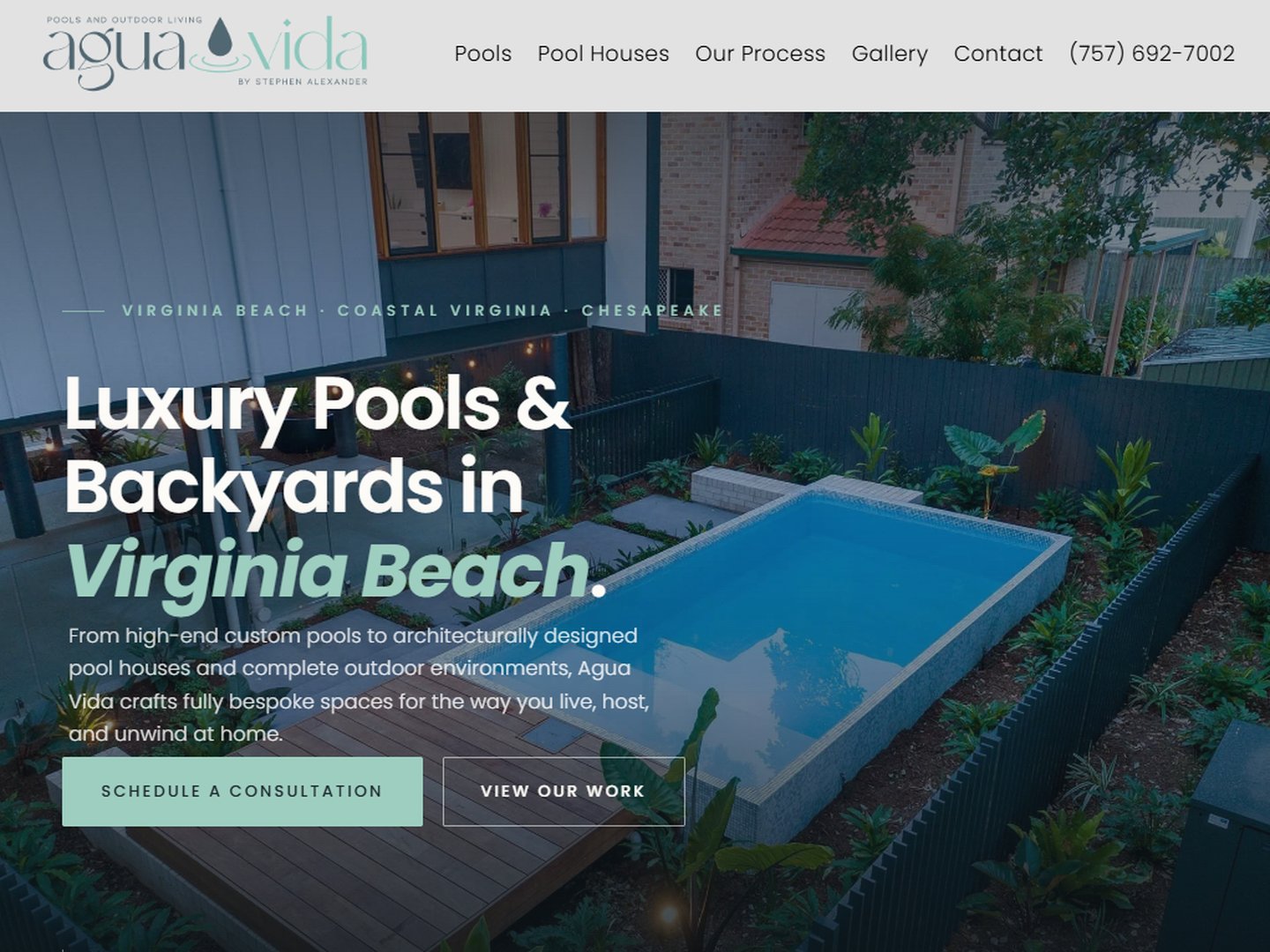
Explore the Agua Vida Pools & Outdoor Living case study for a documented Bryant Digital project. The case study explains its own scope and reported outcomes; it is not a projection for another business.
For help applying this work, review our brand positioning for pool builders and the Market Leader System, or explore all pool builder marketing resources.